BALI SAUNA
The Maker
Nozomu Sato. I designed BALI SAUNA and I run it. I was born in Hokkaido, Japan's northernmost island.
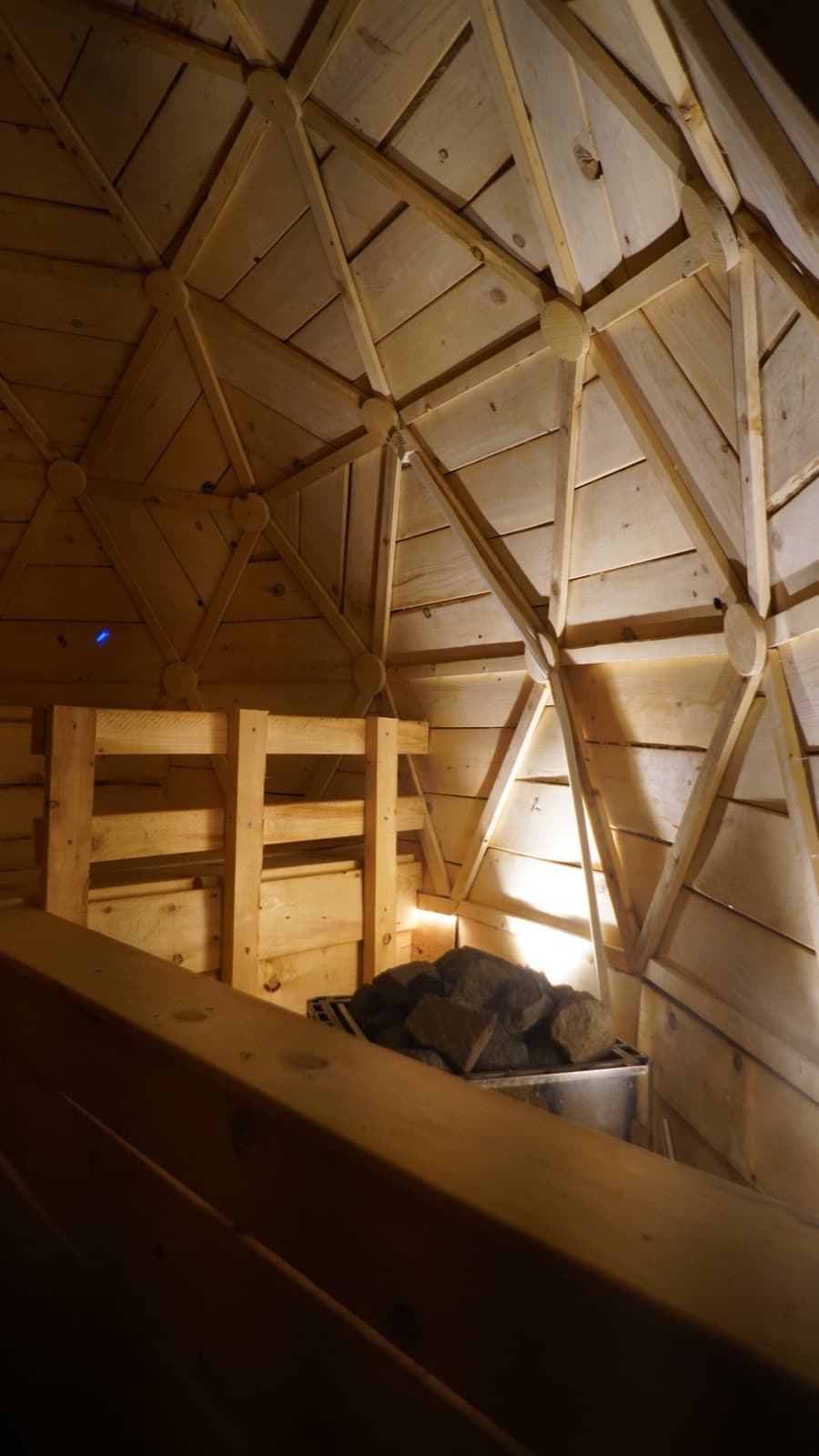
cedar, stones from Mount Batur — built by hand
Japan is full of hot springs. Onsen are woven into the culture, and my hometown — Sapporo, Hokkaido — has plenty of them. I was going to onsen before I can even remember.
I found saunas in my teens. There was a sauna attached to an onsen, and an older guy going back and forth between the sauna room and the cold bath looked so blissful that I copied him. Sauna, cold bath, again and again — until I arrived at the state Japanese sauna culture calls totonoi.
After that, I was the kind of sauna lover who goes more than 300 times a year. My life in Japan was organized around it.
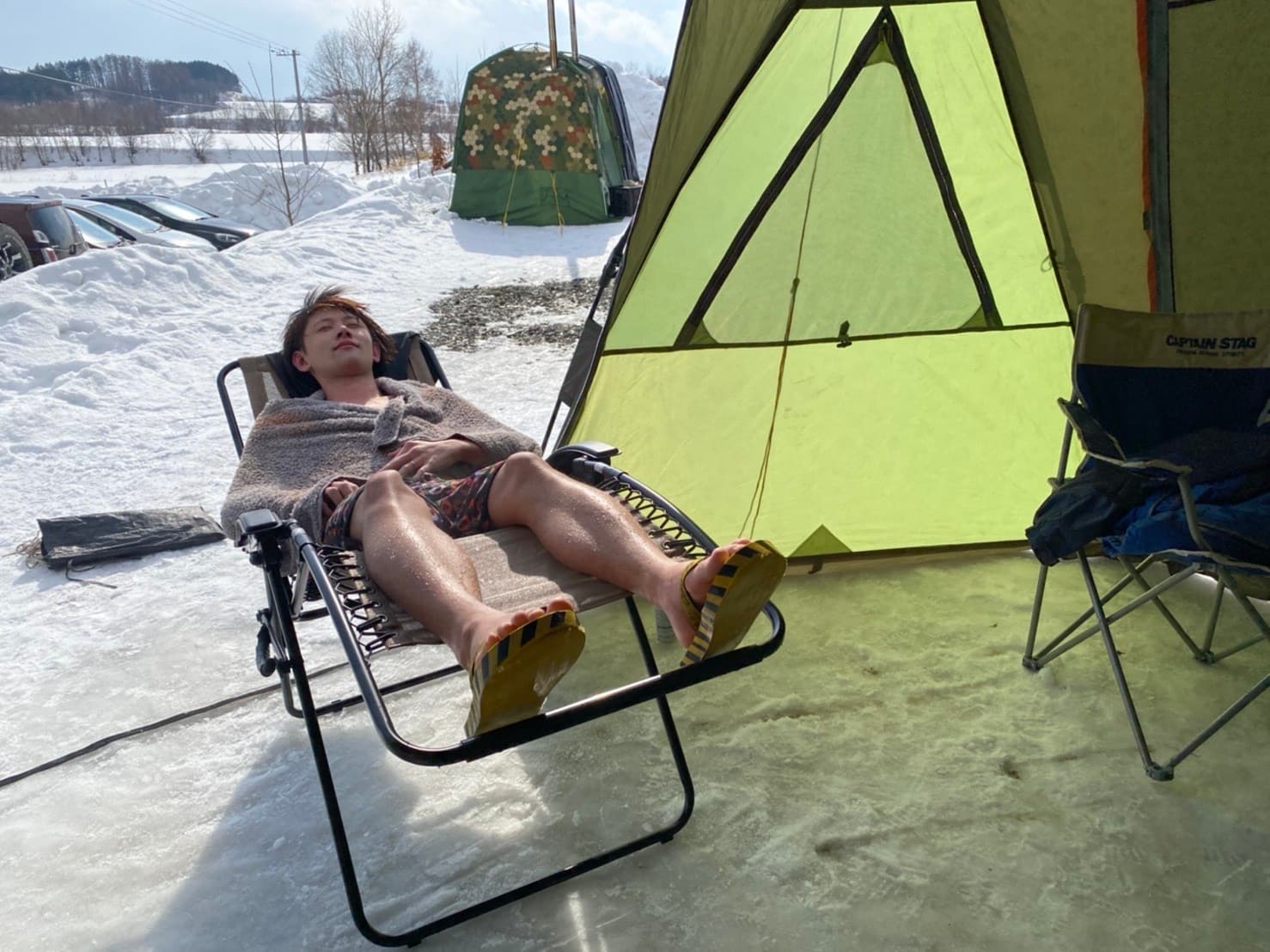
snow, towel, after the sauna
My work was building systems — long days at a computer — and the sauna was how I reset my brain. Many of my friends, company founders and investors, used it the same way: a reset button for thinking.
In 2023, when Covid ended, I moved to Bali. Before Covid my family had traveled to many countries looking for the place we liked best, and Bali won by a wide margin. The scale of the nature, the kindness of the people. I have a son, and Bali felt like a good place to raise him. So we moved.
These days new saunas keep opening in Bali, but when I arrived there were almost none. The few that existed were too lukewarm, or had no cold bath at all, or had no air intake and exhaust so the room was hard to sit in, or got the balance of radiant and convected heat wrong. For a sauna lover, very few were satisfying.
Then one day, through a connection, I was asked to design a new sauna facility in Denpasar. That is when I stopped being only a user and studied saunas thoroughly, as a builder.
On how to build a sauna, Finland has published a great deal — research and books full of formulas. You can't bring many books to Bali, so I studied mostly on e-books, read papers from Finnish universities, and started by understanding the sauna completely.
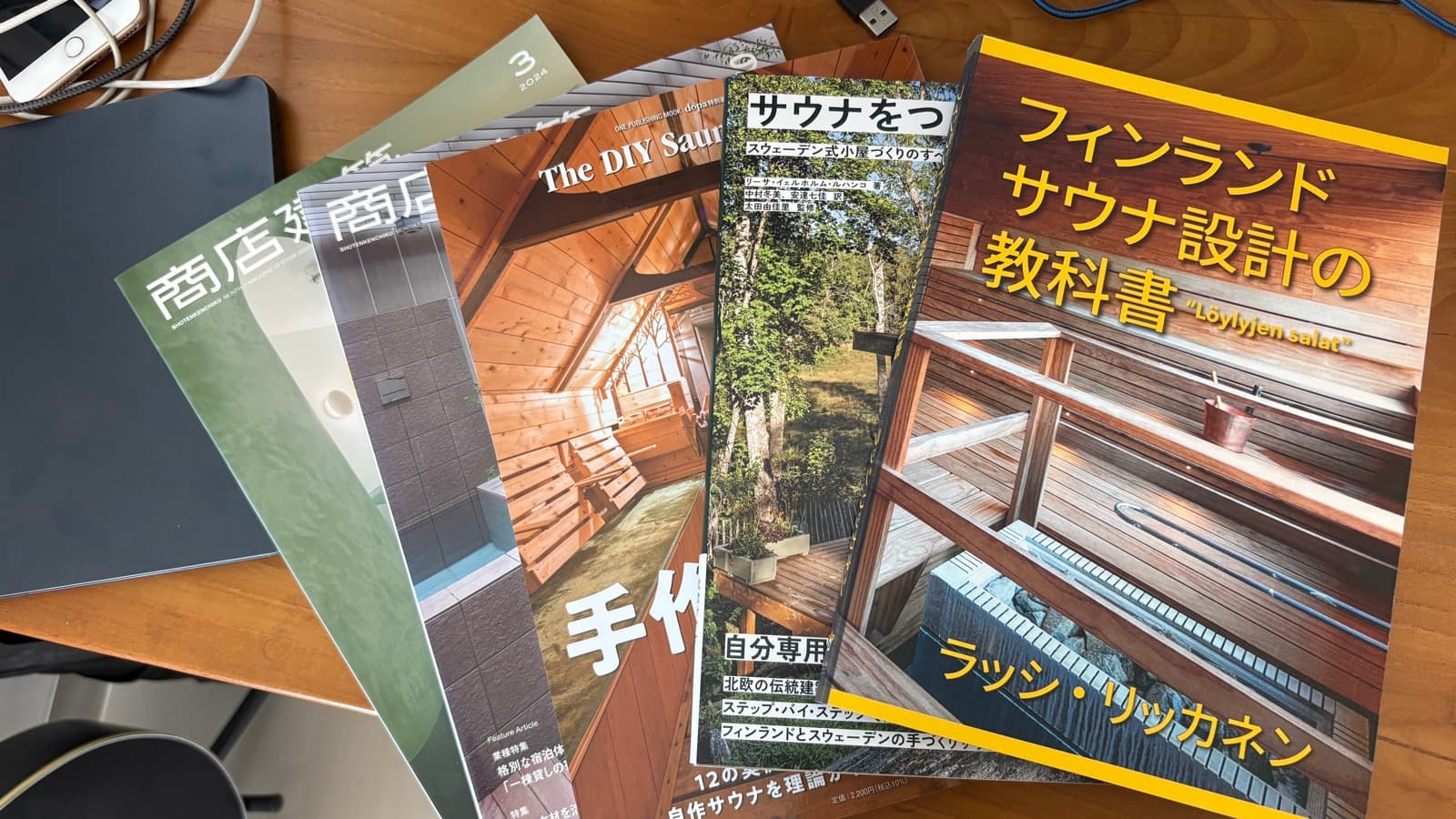
sauna-design books and journals
What I learned was that Japanese sauna culture has been evolving in isolation — on an island, rarely leaving it, so very few people outside ever get to notice how good it is.
Part of the reason: many Japanese saunas and onsen restrict entry for people with tattoos, so for visitors from countries where tattoos are ordinary, getting into a Japanese onsen or sauna is a high hurdle. As a result, Japanese sauna culture is barely known to the world — an untranslated culture, like ikigai or matcha.
Totonoi is hard to explain even in Japanese, and hard to translate into English. If I had to try: by putting sauna time into your everyday life, the quality of the hours after the sauna — and of your life as a whole — goes up. The full explanation is long; I will attempt it in another article.
What I am getting at is this: Japanese people love efficiency. We like effects that arrive quickly. Sauna culture was born in Finland, the Germans made it entertaining with Aufguss, and the Japanese made its effects simple to reach. (I know the true birthplace of the sauna — Russia, Finland, the Baltics — is a topic sensitive enough to start arguments inside a sauna room. For simplicity, let me write Finland here.)
Japan designed saunas for reaching totonoi simply, and evolved the sauna into a tool for raising the quality of life as a whole.
Out of all that study came the sauna I actually built: ZA SAUNA in Denpasar, a half-dome sauna made of concrete. The concept was to introduce saunas to Indonesians, so we projected projection mapping onto the exterior — something to enjoy even before you know what a sauna is.
The sauna itself turned out very good. It also left me with plenty to reflect on. Unfortunately I stepped away from the management a year after opening, so I am no longer involved — but I think ZA SAUNA is a genuinely good sauna. After that, I went independent and became the head of the BALI SAUNA group.
What I insisted on this time: the way convected heat circles inside a dome. Real wood warmth, in European cedar. A layout that moves you efficiently toward totonoi. The airflow design, of course. The sauna stones are quarried from the crater of Mount Batur, Bali's volcano — stones that until a few years ago had been warmed by magma for centuries. The herbs are all Indonesian: local medicinal plants and local stone. I have too many opinions about the details — half a year after opening, we are still renovating and updating almost every day.
So many people have helped along the way. Let me use this page to say thank you.
"Bring sauna culture to Indonesia." "Build a heaven in Bali." Those are the two slogans this business runs on.
More and more sauna facilities are opening in Bali. Plenty of them started because saunas make money. Ours started because I love saunas. I hope you can feel that in the space.
Nozomu Sato — BALI SAUNA